

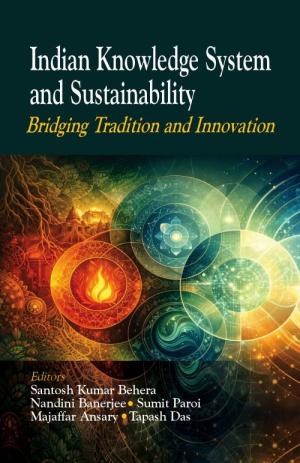

BRIDGING TRADITION AND INNOVATION
pp vi+154
The Indian Knowledge System has made profound and enduring contributions across numerous domains, including mathematics, astronomy, philosophy, yoga, medicine , agriculture, linguistics, literature, Indology, architecture, sports, governance, environmental conservation, and many other fields. These traditions are characterised by rich intellectual heritage, diverse perspectives, and practical wisdom that continue to deepen our understanding of the universe and humanity’s place within it.
The volume brings together selected research papers that highlight the contemporary relevance of IKS. Enriched by the fresh perspectives of Gen Z scholars, it presents diverse research insights and innovative interpretations. The book also explores the meaningful integration of IKS with the UN Sustainable Development Goals (SDGs), showcasing how its holistic, community-centric, and nature-harmonious approaches offer valuable pathways toward sustainable development. This compilation of Seminar papers may serve as a resource for all stakeholders interested in the Indian Knowledge System and sustainability.
Dr. Santosh Kumar Behera is presently Associate Professor, Department of Education, Kazi Nazrul University, Paschim Bardhaman, West Bengal, with more than 15 years of teaching experience.
Dr. Nandini Banerjee is Assistant Professor of Education at Kazi Nazrul University, Asansol, with over 14 years of teaching experience.
Dr. Sumit Paroi currently is an Assistant Professor, Department of Education, Kazi Nazrul University, he previously served at Sidho-Kanho-Birsha University, Purulia.
Dr. Majaffar Ansary is an Assistant Professor in the Department of Education, Kazi Nazrul University, Asansol.
Dr. Tapash Das is currently serving as Assistant Professor in the Department of Education at Kazi Nazrul University, Asansol and has around eight years of teaching experience.
Preface iii
1. Ethical and Spiritual Teachings of Guru Granth Sahib for Holistic Development- Kiranjeet/ 1
2. Transformation of the Indian Knowledge System into Modern Education System: An Overview- Biswajit Saha/ 11
3. Relevance of Ancient Indian Environmental Ethics in Contemporary Policy Making- Prosanta Saha and Alauddin Middya/ 19
4. Ancient Indian Knowledge and Development of Environmental Awareness- Sarmila Banerjee/28
5. Bridging IKS and Modern Technology Education in Context of NEP 2020- Subhankar Ghosh, Sekh Nur Hossain and Rajasi Roy/ 39
6. Revitalizing Ancient Knowledge: Analyzing Relationship between Vedic Gurukul Form of Teaching and Contemporary Blended Learning Approach- Sourav Chandra Gorain/49
7. Sri Sathya Sai Integral System: A Model of Holistic Education- P. Lavanya and Blon Tamang/56
8. Indigenous Knowledge and Modern Technology: A Systematic Review of the Literature and Future Research Directions- Shubha Sarkar/65
9. Digital Pathways to Indigenous Wisdom: A Model for Teacher Education- Anshu Chandra/75
10. Music and Well-Being: Proven Therapeutic Applications in Clinical Practice (An Analytical Overview)- Sohini Bhattacharyya/ 87
11. Indian Handicrafts: A Catalyst for Women Empowerment and Sustainable Development- Kartik Chandra Pramanik and Amina Khatun/ 98
12. Traditional Building Techniques: Indian Architecture with Sustainable and Eco-Friendly Framework- Gourav Kali/ 107
13.Ancient Indian Knowledge and Environmental Awareness- Abhijit Kumar Ranjan/ 115
14. Role of Cultural Festivals in Promoting Sustainability in India- M. Ansary & Beauty Bhandary/122
15. Think Towards Beyond Sustainability: Promoting the Creature Centric Model- Priyanka Ojha, Laxmiram Gope and Sujit Kuiry/130
16. Indian Knowledge System in Ancient vs Modern Curriculum: A Comparative Study- Kanika Dutta and Sanjana Nai/ 137
17. Indian Knowledge System and SDGs: Exploring the Relationship- Ranjan Majhi/ 143
Editors and Contributors/ 151